Product details description
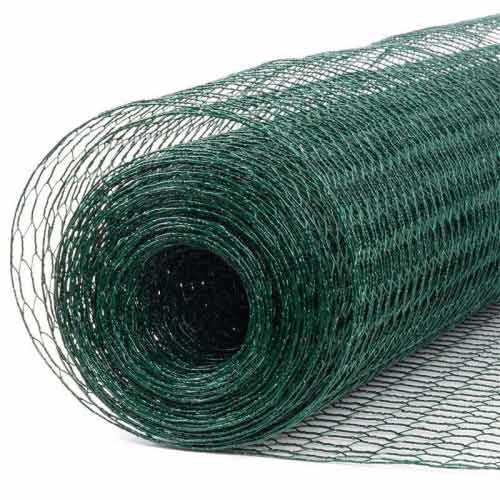
Chicken wire mesh, also known as poultry netting or hex netting, serves as
a fundamental material for agricultural applications, garden protection, and
light-duty containment needs across residential and commercial settings. The
durability of chicken wire under various weather conditions directly impacts its
effective service life and the level of protection it provides to enclosed areas
and contained animals. Understanding how chicken wire performs when exposed to
rain, snow, extreme temperatures, and sustained sunlight enables property
owners, farmers, and contractors to make informed decisions about material
selection, installation practices, and maintenance requirements that maximize
wire mesh longevity. Scientific testing methodologies and practical field
observations provide complementary perspectives on chicken wire durability that
inform both product development and end-use applications.
Exposure to moisture represents one of the primary factors affecting
chicken wire durability, with galvanized coatings providing the primary defense
against the corrosion that compromises wire integrity over time. Standard
galvanization treatments create zinc coatings that sacrifice themselves to
protect the underlying steel, with coating weight directly correlating to
expected service life in moist environments. Heavy galvanization with coating
weights exceeding 350 grams per square meter provides excellent resistance to
rust formation, while lighter galvanization in the 200 gram range may prove
adequate for temporary installations or dry climate applications. Field testing
demonstrates that properly galvanized chicken wire maintains structural
integrity for 15 to 25 years in moderate climates, though coastal environments
with salt spray exposure may reduce expected service life by half or more due to
accelerated coating degradation.
Temperature cycling creates expansion and contraction stresses that can
affect chicken wire performance, with extreme temperature variations potentially
causing wire fatigue at stress points including bends, crimps, and welded
intersections. Testing protocols expose wire samples to temperature ranges from
-20°F to 120°F (-29°C to 49°C) with cycling frequencies that simulate seasonal
transitions, measuring changes in tensile strength, coating integrity, and
dimensional stability. Results indicate that quality chicken wire maintains
performance characteristics within acceptable limits through thousands of
temperature cycles, though repeated freeze-thaw events can accelerate coating
failure at points where moisture has infiltrated wire surfaces. Installation
practices that avoid tight bundling and allow some flexibility in mesh placement
help accommodate thermal movement without creating stress concentrations that
could lead to premature failure.
Ultraviolet radiation degradation affects the polymer components of
PVC-coated chicken wire while also contributing to the gradual oxidation of
unprotected steel surfaces, though galvanized coatings provide substantial UV
resistance that maintains protective effectiveness for many years of outdoor
exposure. Testing confirms that the zinc-iron alloy layers formed during hot-dip
galvanization provide stable corrosion protection that is not significantly
affected by UV radiation, with coating degradation in field conditions driven
primarily by moisture and chemical exposure rather than sunlight effects.
PVC-coated variants require specific UV stabilization additives to maintain
color and flexibility under sustained sun exposure, with quality products
providing 10 to 15 years of UV resistance before noticeable degradation begins.
Property owners selecting chicken wire for sunny applications should verify UV
stabilization specifications to ensure appropriate product choices for their
specific environmental conditions.
Previous article:
Why Chicken Wire Mesh Is the Best Choice for Supporting Climbing Plants
Next article:
Flexible Chicken Wire Netting - Easy to Shape & Install